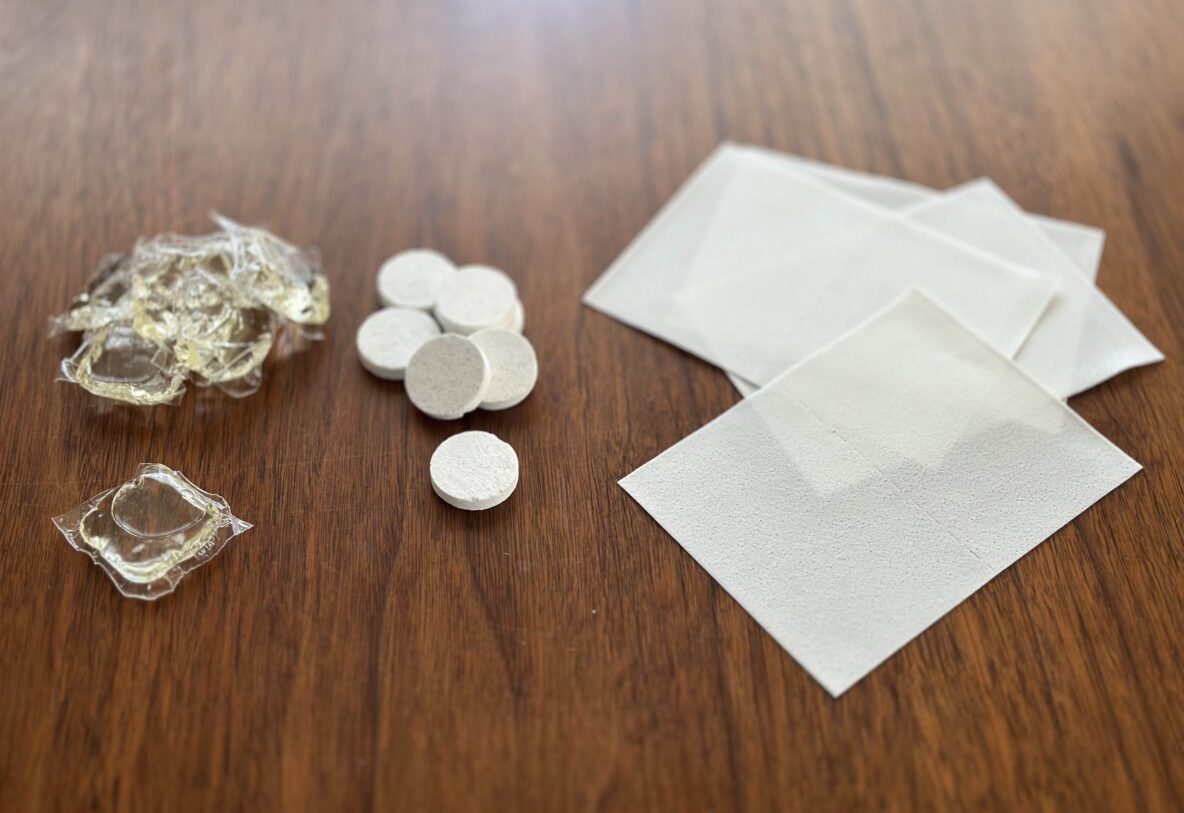
In an effort to reduce plastic packaging and overall waste, I’ve been trying several different new eco-friendly laundry detergents in order to weigh performance, cost, and waste reduction between different brands and types of detergents. I’m using three different types of detergent: Method For these tests, I’m using our own front-loading High Efficency (HE) washing machine, one that uses less …
Eliminating Waste in Packaging – Laundry, Dishwasher & Hand Soaps
There have been so many cool new innovations recently in packaging reduction and the re-imagining of how to deliver products to consumers, most notably in the cleaning and detergents category. Many have led the way into more environmentally friendly cleaners, like Method, Vaska, and Seventh Generation; and building on that is a new generation of cleaning products that come without …
Waste from Shoes and Shoes from Waste
It’s estimated that 20 billion pairs of shoes are produced annually, with roughly 300 million pairs ending up in landfills after they have been worn. The Ethylene Vinyl Acetate, which usually makes up the midsole of most running shoes, can last for as long as 1,000 years in a landfill. There are a few organizations out there trying to reduce …
tonlé – Waste Free Ethical Fashion
You may not realize it, but a lot of clothes these days are made in Cambodia. Take a look at your clothing tags, and I’m sure you will find quite a few naming this South East Asian country. With all of those textile factories in such a small country, you are probably wondering what’s the deal? The perfect storm of …
Green Your Thanksgiving – Tips For A Greener Holiday
With Thanksgiving coming up, there is much to do to prepare for a green holiday. Make the conscious choice to reduce waste without sacrificing (you may up even saving money this year!) There is as much involved in the preparation as the choices you make during the meal. From choosing local and organic produce to preparing your guests and family …
Seattle Appliance Recycling – Appliance Away
I introduced these guys a little while back when they started their first landfill diverting project of recycling mattresses, they have now expanded to home appliances! Now serving Washington’s King County, they offer local residents the easiest way to go green by recycling old appliances that are taking over our landfills! Appliance Away is the best way to dispose of …
The Environmental Impact of Everyday Things
Well, maybe not every day, but certainly every month. That’s right ladies and gents, we’re talking about the environmental impact of feminine hygiene products: tampons, pads, the whole deal. Now before I get into this topic I want to address the readers who might be cringing here. While acknowledging that public discussion of menstruation is a bit on the taboo …
PeopleTowels: No they’re not made out of people…
I still remember what I initially thought when I first heard about PeopleTowels. I’m rather ashamed to admit it was something along the lines of “What, are they made of people?” Thankfully, no. They’re made for people, to empower people to cut back on the over consumption of paper towels. As co-founder Linda Lannon puts it, “It is the opposite …